
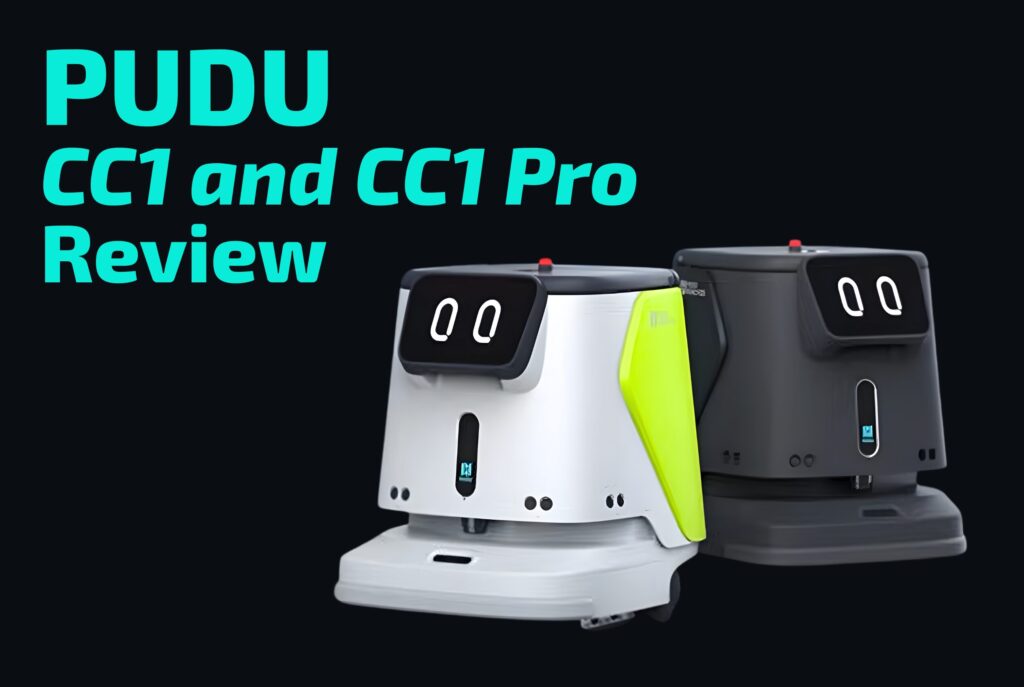
PUDU CC1 and CC1 Pro – Commercial Robot Vacuum Review
Quick Take
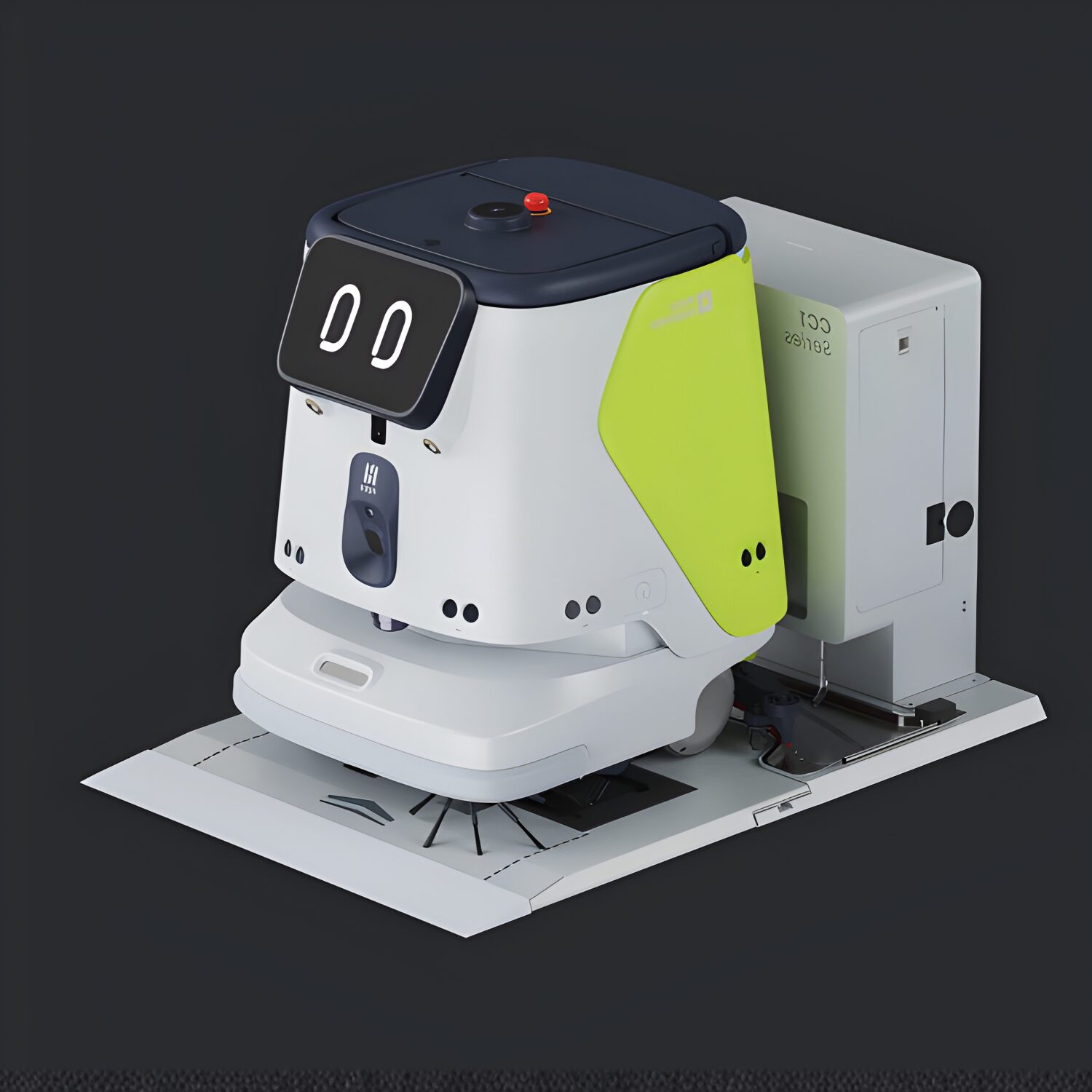
A highly versatile 4-in-1 cleaning solution that brings serious automation to commercial hard floors. It handles sweeping, scrubbing, and mopping with impressive autonomy thanks to its auto-refill station, though its onboard tank capacity means it stays tethered to that dock more often than some industrial-only rivals.
Who This Robot Vacuum Is Best For
Standout Features at a Glance
Pros & Cons
Pros
Cons
Design & Build Quality
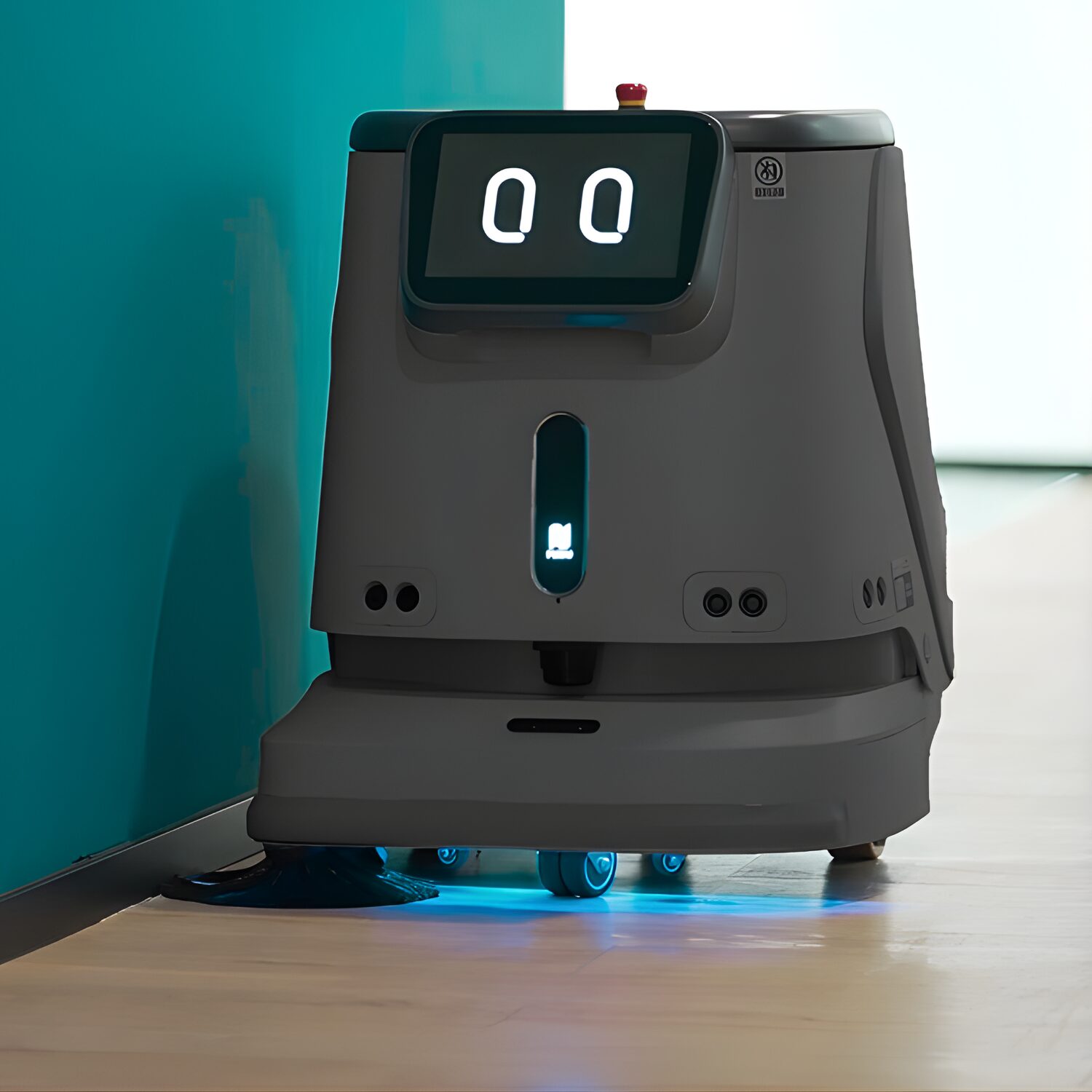
- Overall Construction: The Pudu CC1 feels robust and modern, weighing in at around 75kg (165 lbs). It features a “tech-forward” aesthetic with a friendly digital face, which helps it blend into public-facing environments like schools or retail stores without looking too industrial.
- Size, Weight, Dustbin Access: It is relatively compact for a commercial scrubber (approx. 64 x 56cm or 25 x 22 inches footprint), allowing it to fit through standard doorways and narrow aisles easily. The modular design is a highlight—components like brushes and squeegees clip on and off quickly for maintenance.
- Durability for Commercial Use: Built with a sturdy chassis and solid-state LiDAR, it is designed to withstand daily commercial abuse. The IPX4 rating offers some protection against splashes, which is standard for scrubbers.
- Noise Levels in Real-Life Scenarios: At under 70dB, it is significantly quieter than traditional walk-behind scrubbers, allowing it to run during business hours without disrupting conversations or meetings.
Navigation & Mapping
- Ease of Setup: Setup is handled via the onboard touchscreen and requires driving the robot around to map the space. Unlike older AGVs, you don’t need to tape lines on the floor or stick reflectors on walls.
- Map Accuracy: The dual SLAM (Visual + LiDAR) creates highly accurate maps. It handles large square footage well (up to ~12,000 sq ft per hour efficiency) and can store multi-floor maps.
- App Stability: The PUDU app allows for remote monitoring and scheduling. It provides real-time status updates and “digitized cleaning reports” that facility managers appreciate for accountability.
- Lidar/Radar/Camera Performance: The sensor suite is comprehensive, combining RGBD cameras and LiDAR to detect obstacles—including glass walls, which often confuse laser-only robots.
- How it Handles Obstacles in Real Commercial Spaces: It stops and reroutes smoothly around people and static objects. However, users should be aware of a known blind spot on the rear right side when the robot is turning.
- Zone Control: Supports complex zoning, including virtual walls and specific “spot clean” targets triggered by the AI camera if it detects a spill (on Pro models).
Cleaning Performance
Battery & Runtime
- Actual Tested Runtime vs Advertised: Advertised up to 9 hours (Silent Mode), but realistically expect about 5 hours for heavy scrubbing/vacuuming.
- Charging Time: Recharges fully in under 3 hours, which is quite fast for a 50Ah battery.
- Docking Reliability: The robot returns to the dock automatically when the battery is low or tanks need service. It supports “breakpoint resume,” meaning it goes back to finish the job after charging.
- Performance Drop: Consistent power delivery until the battery hits critical low levels (below 5-10%), at which point it forces a return to dock.
- Suitability for Large Commercial Spaces: Because it recharges quickly and works autonomously, a single unit can manage a mid-sized facility (e.g., a school wing or supermarket) over a full day. For 24/7 operations, you would need two units or scheduled breaks.
Spec Sheet
Machine |
Specifications |
|
Size (L × W × H) – cm |
63 x 55 x 70 |
|
Weight – kg |
75 |
|
Cleaning Head Type |
Sweep, Vacuum, Scrub, Dustmop |
|
Cleaning Head Width – cm |
50 (Sweeping) / 40 (Scrubbing) |
|
Vacuum Cleaning Width – cm |
? |
|
Rotating Speed of Pads/Brush Rollers (rpm) |
? |
|
Debris Bin / Dust Bag Capacity |
? |
|
Solution Tank Capacity (Clean Water) Liters |
15 |
|
Recovery Tank Capacity (Waste Water) Liters |
15 |
|
Battery Type |
? |
|
Battery Capacity |
? |
|
Rated Voltage |
? |
|
Run Time |
~5 hours (Scrubbing), up to 9 hours (Silent) |
|
Charging Time |
< 3 hours |
Performance |
|
|
Floor Type |
Hard Floor, Carpet |
|
Indoor/Outdoor |
Indoor |
|
Maximum Theoretical Productivity – m2/h per charge |
700-1000 |
|
Practical Average Productivity |
? |
|
Maximum Speed – kph |
4.3 |
|
Brush/Suction Power |
17,000 PA |
|
Noise Level – dB |
< 70 |
|
HEPA Filtration |
No |
|
Minimum Pass Width – cm |
? |
|
Minimum U-Turn Width – cm |
? |
|
Edge Cleaning Capability – cm |
0 |
|
Climbing Height / Threshold Clearance – cm |
? |
|
Incline Ability % |
? |
Features |
|
|
Sensing / Navigation System |
Visual SLAM + LiDAR SLAM |
|
Lidar Coverage |
? |
|
Data Storage (Cloud or Device-Based) |
Wi-Fi, 4G, Bluetooth |
|
Automated Return to Charging Point |
Yes |
|
Automated or Manual Mapping |
Manual |
|
App or Software Compatibility |
App |
Maintenance
- How Easy it is to Empty the Bin: The debris bin (sweeping) is small (2.5L – 6L) and needs manual emptying unless you rely purely on the vacuum bag. The water tanks are fully automated if you have the workstation.
- Filter Access and Replacements: Modular design makes accessing filters and brushes straightforward. No tools are required for daily maintenance tasks.
- Brush Cleaning: Brushes detach easily for rinsing. The “Pro” version has some self-monitoring capabilities to alert you when components are dirty.
- Availability of Spare Parts: Parts like squeegees and brushes are available through major robotics distributors
- Longevity Concerns: The main wear items are the rubber squeegees and brushes. The chassis itself is built for the long haul.
Software & App Experience
- Set-up Experience: Professional installation is often included or recommended by distributors due to the mapping complexity, but the interface itself is user-friendly.
- App Intuitiveness: The PUDU app is clean and functional, allowing you to view the robot’s “eyes” and status remotely.
- Scheduling: Highly flexible. You can schedule specific zones for different times (e.g., “Clean Lobby at 2 AM”).
- Notifications: Sends alerts for low water, full waste tank, or if the robot gets stuck.
- Remote Monitoring: You can track the robot’s path in real-time.
- Firmware Updates Reliability: Updates are pushed over-the-air (OTA).
- Offline Functionality: Can operate on a local network, which is a big plus for secure commercial environments.
Important Details
Reliability and Support
You want to know that assistance doesn’t end as soon as the sale is made.
Warranty
Typically 1-2 years depending on the distributor.
Customer Service Experience
Support is generally handled through the local distributor rather than Pudu directly, so choose your vendor carefully.
Replacement Part Availability
Consumables are readily available online.
Known Quirks & Recurring Issues
The “blind spot” on turns can occasionally cause it to bump into things if the map isn’t updated or if the space is very cluttered.
Price & Value
- What You Get for the Price: You are paying for the autonomy. The $25-35k price tag includes the robot and typically the workstation (varies by bundle). You get a machine that can replace 4-5 hours of daily manual labor.
- Best Use Cases for This Price Point: Facilities where cleanliness is critical to brand image (hotels, malls) or where labor shortages are acute.
- How it Compares to Competitors: Cheaper than large industrial ride-on robots but more expensive than simple “vacuum-only” commercial bots (like the Whiz). It bridges the gap by offering full wet scrubbing.
- Whether It’s a Good Investment: For businesses spending over $3,000/month on floor cleaning labor, the ROI is usually reached within 12-18 months.
Where to Buy: Distributor & Manufacturer Options
Final Verdict
The Pudu CC1 is a polished, professional-grade cleaner that excels in environments where image and hygiene matter. It is not a rugged industrial beast for a grimy factory floor, but it is perfect for schools, hospitals, and retail spaces. If you pair it with the automatic workstation, it delivers on the promise of true autonomy, freeing up your cleaning staff to focus on high-touch surfaces rather than pushing a mop.
FAQ
The PUDU CC1 Pro is an enhanced version of the PUDU CC1, primarily distinguished by its integration of advanced AI-powered perception and control systems for a more autonomous and data-driven cleaning process.
Key differences are:
Real-Time Performance Detection: The CC1 Pro features a rear AI camera that continuously monitors the floor for cleanliness, something the original CC1 lacks. If the Pro version detects remaining stains, it automatically performs a re-clean (touch-up cleaning).
AI Spot Scrubbing: The Pro model can autonomously identify wet or dirty spots and initiate targeted, high-efficiency spot scrubbing, which is not a feature of the standard CC1.
Adaptive Cleaning Intensity: The CC1 Pro automatically adjusts its cleaning power (e.g., activating deep scrubbing in heavily soiled areas) based on detected dirt levels and floor types to balance effectiveness and energy efficiency, a feature absent in the CC1.
Component Self-Monitoring: The Pro version is the first commercial cleaning robot capable of autonomously monitoring the condition of its own components (like brushes and squeegees) using image recognition, alerting staff or triggering self-cleaning cycles to prevent secondary pollution.
Data and Analytics: The CC1 Pro provides detailed operational dashboards and heat maps that visualize cleaning effectiveness, debris distribution, and maintenance needs for better facility management. The CC1 offers basic monitoring and reporting.
Navigation: Both use a combination of Visual SLAM and LiDAR SLAM, but the CC1 Pro’s system is enhanced with AI fusion for improved navigation in complex, dynamic environments without relying on ceiling markers.
Max Cleaning Area (m²/h): The Pro model has an optimized cleaning range of up to 5,000–8,000 m² per operation with AI precision, compared to the CC1 which can map up to 100,000 m² but with a lower general cleaning rate (e.g., 700–1,000 m²/h vs 1,500–3,000 m²/h for AI spot scrubbing).
Hardware Enhancements: The Pro model includes hardware upgrades like optional self-cleaning roller brushes, a contour-adaptive brush chamber, and high-durability metal mesh filters to improve operational efficiency and lifespan.
In essence, the CC1 Pro offers a more intelligent, closed-loop, and autonomous cleaning experience with less manual intervention required for monitoring and maintenance compared to the CC1.
These technical guides highlight the CC1 Pro’s advanced AI features, including real-time performance detection, adaptive cleaning intensity, and component self-monitoring, compared to the standard CC1.