
Gausium Scrubber 50 (Disc & Roller) – Commercial Robot Floor Cleaner Review
Quick Take
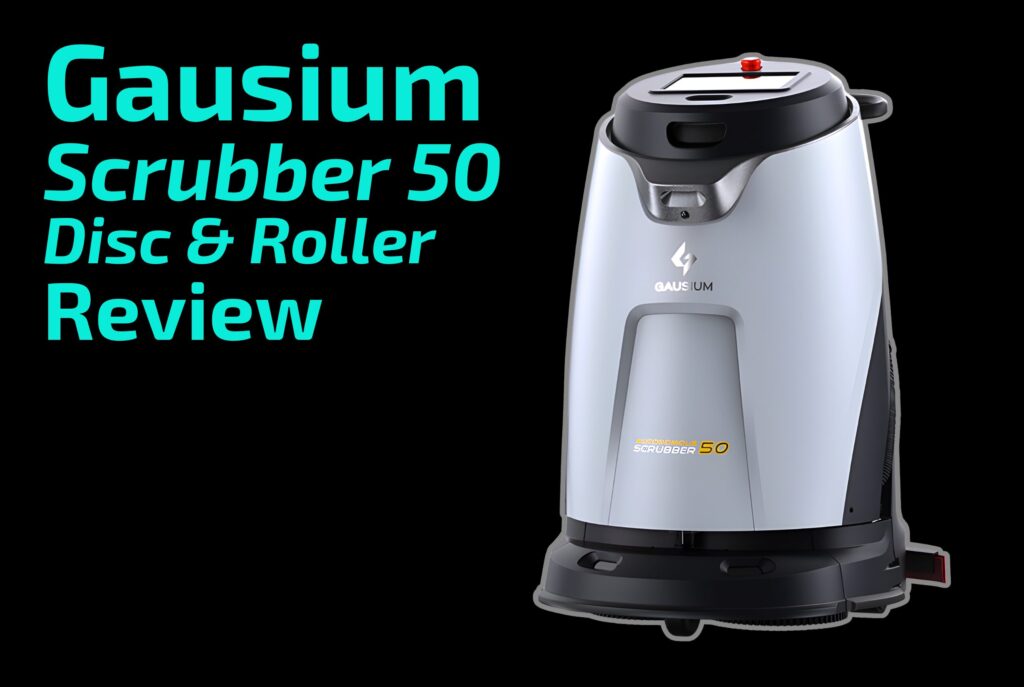
The Gausium Scrubber 50 series (Pro) is the industry standard for “Corridor Class” autonomous cleaning, balancing compact size with serious industrial capability. Whether you choose the deep-scrubbing Disc model or the sweep-and-scrub Roller model, you get a highly intelligent, modular robot that can navigate complex dynamic environments while recycling its own water for extended shifts.
Who This Robot Vacuum Is Best For
Standout Features at a Glance
Pros & Cons
Pros
Cons
Design & Build Quality
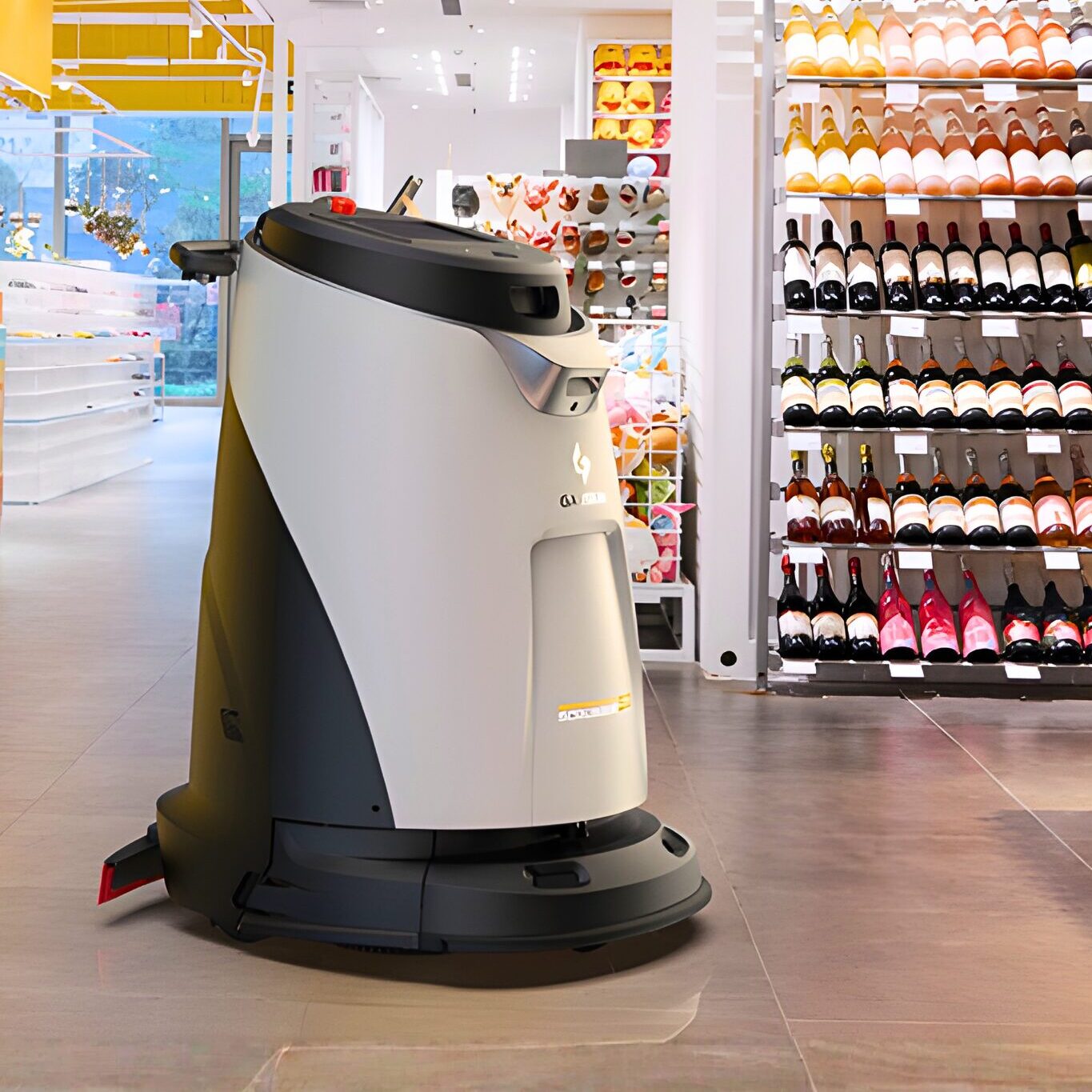
- Overall construction: The Scrubber 50 feels premium and industrial. The “Pro” version design is sleek yet rugged enough for factories. It won Red Dot Design awards for its user-friendly interface and aesthetics.
- Size, weight, dustbin access: It occupies a footprint of roughly 81 x 70 cm. Access to the tanks (30L/24L) is straightforward. The Roller model’s trash trays slide out for emptying but are relatively low-capacity.
- Durability for commercial use: Built with long-life LFP batteries (2,000 cycles) and simplified maintenance points. The chassis is robust, designed to take the bumps of daily commercial use.
- Noise levels: Operates between 55-70 dB. In “Eco” modes, it is quiet enough for daytime cleaning in hospitals without disturbing patients.
Navigation & Mapping
- Ease of setup: “Teach & Follow” mode allows operators to simply walk the robot through a route to program it. Auto-mapping is also available for open areas.
- Map accuracy: Uses a fusion of 2D LiDAR, 3D Depth Cameras, and RGB Cameras to maintain centimeter-level accuracy even in changing environments (like a busy warehouse).
- App stability: The Gausium app offers real-time monitoring, remote control, and detailed reporting (heatmaps of cleaned areas).
- Lidar/radar/camera performance: The sensor suite is top-tier. It can see “negative obstacles” (drop-offs) and glass walls, which often confuse cheaper robots.
- How it handles obstacles: It is extremely cautious. It detects people and navigates around them smoothly. In tight aisles, it can perform multi-point turns to escape dead ends.
- Zone control: Supports unlimited zones, virtual walls, and “Spot Clean” zones triggered by contamination detection.
Which Gausium Scrubber 50 Should You Choose?
- Disc Model: Best for heavy-duty scrubbing on smooth floors (vinyl, polished concrete). Provides higher brush pressure (25kg).
- Roller Model: Best for textured floors or areas with loose debris. It sweeps small items (toothpicks, chips) into a hopper while scrubbing, preventing squeegee streaks.
Cleaning Performance
Battery & Runtime
- Actual runtime: Expect about 3 hours for heavy scrubbing. In “Dust Mopping” mode (lighter duty), it can run for 6-8 hours.
- Charging time: Very fast—only 2 hours for a full charge. This allows for rapid turnaround between shifts.
- Docking reliability: The optional Workstation allows for fully autonomous power charging, water refilling, and waste draining.
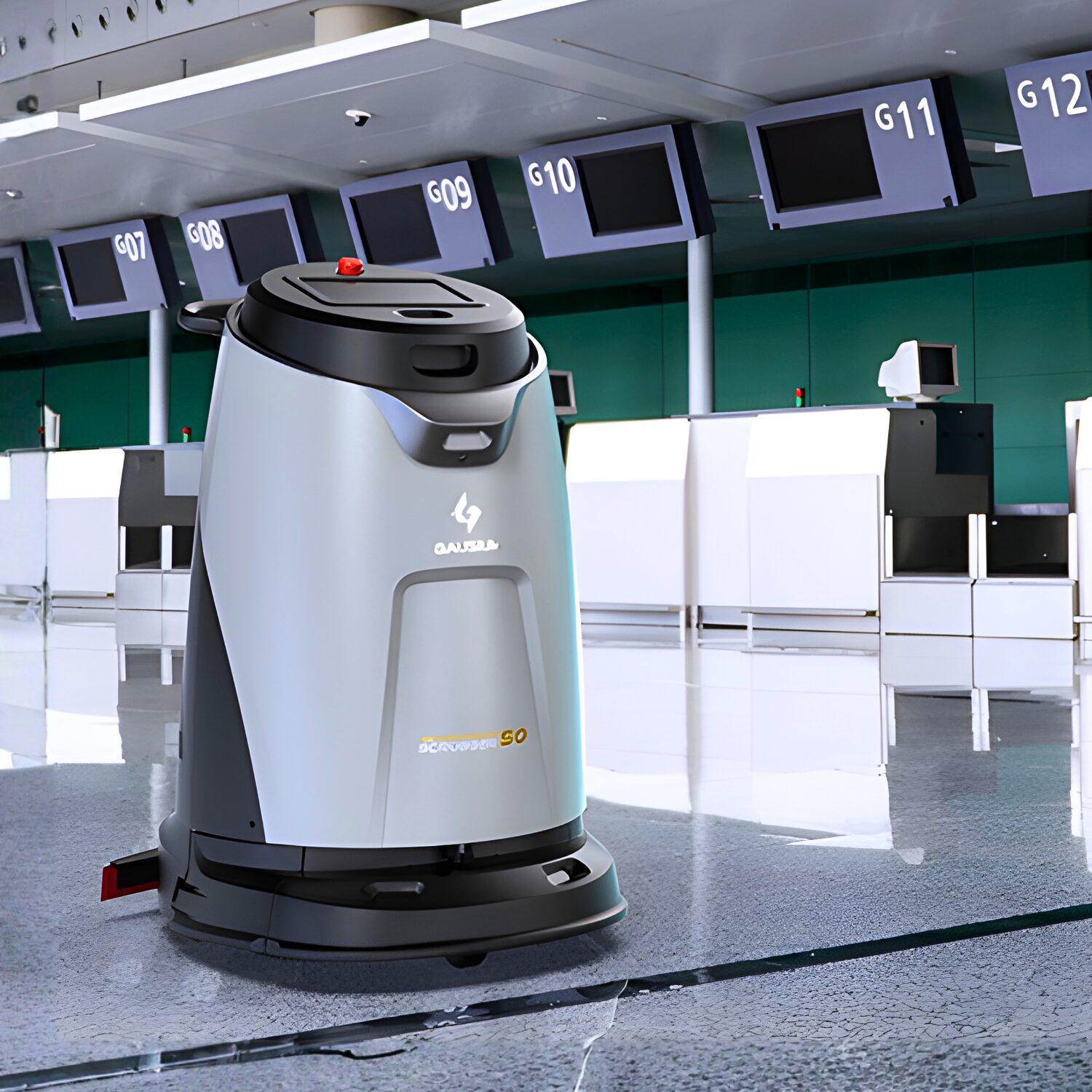
- Suitability for large commercial spaces: Ideal for facilities up to ~50,000 sq ft per shift. With the workstation, it can run indefinitely (24/7) with charging breaks.
Spec Sheet
Machine |
Specifications |
|
|
Size (L × W × H) – cm |
Scrubber 50 (Disc) 81 x 70 x 107 |
Scrubber 50 (Roller) 81 x 70 x 107 |
|
Weight – kg |
157 |
148 |
|
Cleaning Head Type |
Scrubber Disc |
Roller Brush |
|
Cleaning Head Width – cm |
46 |
40.6 (Scrub) / 78 (Sweep) |
|
Vacuum Cleaning Width – cm |
n/a |
n/a |
|
Rotating Speed of Pads/Brush Rollers (rpm) |
? |
? |
|
Debris Bin / Dust Bag Capacity |
n/a |
2 x 0.6L Trays |
|
Solution Tank Capacity (Clean Water) |
30 |
30 |
|
Recovery Tank Capacity (Waste Water) |
24 |
24 |
|
Battery Type |
LFP |
LFP |
|
Battery Capacity – Ah |
60 |
60 |
|
Rated Voltage |
24 |
24 |
|
Run Time – hours |
3-8 |
3-6 |
|
Charging Time – hours |
2 |
2 |
Performance |
||
|
Floor Type |
Hard Floors |
Hard Floors |
|
Indoor/Outdoor |
Indoor |
Indoor |
|
Maximum Theoretical Productivity – m2/hour |
1987 |
1,754 (Scrub) / 2,527 (Sweep) |
|
Practical Average Productivity |
? |
? |
|
Maximum Speed – kph |
4.3 |
4.3 |
|
Brush/Suction Power |
25kg |
18kg |
|
Noise Level – dB |
55-70 |
55-70 |
|
HEPA Filtration |
No |
No |
|
Minimum Pass Width – cm |
80 |
80 |
|
Minimum U-Turn Width – cm |
110 |
110 |
|
Edge Cleaning Capability – cm |
~4 cm |
0 cm (w/ side brushes) |
|
Climbing Height / Threshold Clearance – cm |
? |
? |
|
Incline Ability % |
8 |
8 |
Features |
||
|
Sensing / Navigation System |
3D LiDAR + RGB Camera |
3D LiDAR + RGB Camera |
|
Lidar Coverage – m |
? |
? |
|
Data Storage (Cloud or Device-Based) |
? |
? |
|
Automated Return to Charging Point |
? |
? |
|
Automated or Manual Mapping |
Both |
Both |
|
App or Software Compatibility |
App |
App |
Maintenance
- How easy it is to empty the bin: For the Roller model, the debris trays are small and manual. Wastewater is auto-drained if you have the dock; otherwise, it’s a manual hose drain.
- Filter access: The 5-stage filter system is easy to access for cleaning. Regular rinsing is required to keep the recycling system fresh.
- Brush cleaning: Magnetic brush heads (on Disc) snap off easily. Roller brushes require tool-free removal to cut away hair/string.
- Availability of spare parts: Widely available through major distributors.
- Longevity concerns: Extremely high; industrial build quality significantly outlasts plastic “janitorial” robots.
Software & App Experience
- Setup experience: Professional installation is recommended to optimize the map and docking station, but the daily interface is simple enough for janitorial staff.
- App intuitiveness: The app is robust, allowing you to manage a fleet of robots, check battery levels, and receive completion reports.
- Scheduling: Highly flexible. You can schedule different cleaning modes (e.g., “Quiet Mode” during the day, “Deep Scrub” at night).
- Notifications: Alerts for stuck robots, empty water, or full waste tanks are sent via the app.
- Remote monitoring: You can view the robot’s status and even its camera feed (security feature) remotely.
Important Details
Reliability and Support
You want to know that assistance doesn’t end as soon as the sale is made.
Warranty
Typically 1 year, handled by and possibly extended by the local distributor.
Customer Service Experience
Support depends on your vendor. Gausium provides the tech, but the distributor provides the technician.
Replacement Part Availability
Widely available through plentiful major distributors.
Known Quirks & Recurring Issues
The low ground clearance and 8% climb limit mean it cannot handle steep ramps or large thresholds.
Price & Value
- What you get for the price: You get a robot that replaces 4-6 hours of daily labor. Prices range from $40,000 – $57,000 USD depending on the configuration (Dock vs. No Dock).
- Best use cases for this price point: Facilities with >20,000 sq ft of hard floor where cleanliness is critical to brand image (malls, airports).
- How it compares to competitors: More advanced navigation than Tennant/BrainCorp robots; better water recycling than most competitors.
- Whether it’s a good investment: ROI is typically achieved in 12-18 months through labor savings and chemical reduction.
Where to Buy: Distributor & Manufacturer Options
Final Verdict
The Gausium Scrubber 50 is the gold standard for mid-to-large commercial spaces. It is not just a cleaning machine; it is a water-recycling, spot-cleaning, AI-driven facility assistant. If your floors see heavy traffic and diverse debris, the Roller model is the versatile choice; for pure polish and shine on smooth floors, the Disc model is unmatched.